✨ New Arrivals Just Dropped!Explore
How Two Minds Meet: The Mental Dynamics of Dressage (Paperback)
Beth Baumert's first book, When Two Spines Align: Dressage Dynamics, was a popular and critical success. Lauded by Olympian Carl Hester as the book he most frequently quotes at clinics, it examined the ways the physical bodies of horse and rider work together-the physics behind riding in balance. In Baumert's new book How Two Minds Meet, she takes us beyond physical harmony to look at the minds of both horse and rider, each complete with its own set of emotions and mental capabilities. Readers will explore:
How the mind of the horse works. The rider's "two minds"-the analytical mind and the sensory dimension of the mind (with which the horse more readily identifies). Specific ways to get into the "non-thinking place" where the best communication between horse and rider takes place. Principles of Learning that enable riders to improve the use of the traditional, knowledge-accumulating part of their brains. Nine ideas for boosting your ability to learn, retain, and apply knowledge that's useful in training horses. Methods for organising and "filing" information so it can be best utilised. How to ensure the horse is physically comfortable (balanced) under saddle to allow for a meeting of the minds in the first place.
Not only does Baumert explain how to optimise the use of the "thinking mind" in order to become a better learner in the saddle, she provides techniques for maximising mental and emotional harmony with the horse, a state of unity that feels so good, Baumert calls it the "charming addiction"-once a rider has it, she wants to attain it again and again. Feeding this addiction is possible, says Baumert, with the thoughtful, practical insight she shares in these pages.
How the mind of the horse works. The rider's "two minds"-the analytical mind and the sensory dimension of the mind (with which the horse more readily identifies). Specific ways to get into the "non-thinking place" where the best communication between horse and rider takes place. Principles of Learning that enable riders to improve the use of the traditional, knowledge-accumulating part of their brains. Nine ideas for boosting your ability to learn, retain, and apply knowledge that's useful in training horses. Methods for organising and "filing" information so it can be best utilised. How to ensure the horse is physically comfortable (balanced) under saddle to allow for a meeting of the minds in the first place.
Not only does Baumert explain how to optimise the use of the "thinking mind" in order to become a better learner in the saddle, she provides techniques for maximising mental and emotional harmony with the horse, a state of unity that feels so good, Baumert calls it the "charming addiction"-once a rider has it, she wants to attain it again and again. Feeding this addiction is possible, says Baumert, with the thoughtful, practical insight she shares in these pages.
Product Information
Product Information
Shipping & Returns
Shipping & Returns
How Two Minds Meet: The Mental Dynamics of Dressage (Paperback)
How Two Minds Meet: The Mental Dynamics of Dressage (Paperback)
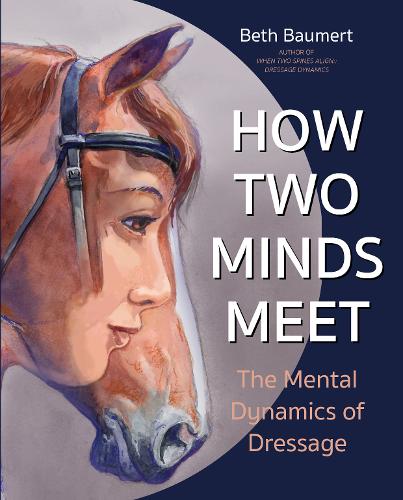
Beth Baumert's first book, When Two Spines Align: Dressage Dynamics, was a popular and critical success. Lauded by Olympian Carl Hester as the book he most frequently quotes at clinics, it examined the ways the physical bodies of horse and rider work together-the physics behind riding in balance. In Baumert's new book How Two Minds Meet, she takes us beyond physical harmony to look at the minds of both horse and rider, each complete with its own set of emotions and mental capabilities. Readers will explore:
How the mind of the horse works. The rider's "two minds"-the analytical mind and the sensory dimension of the mind (with which the horse more readily identifies). Specific ways to get into the "non-thinking place" where the best communication between horse and rider takes place. Principles of Learning that enable riders to improve the use of the traditional, knowledge-accumulating part of their brains. Nine ideas for boosting your ability to learn, retain, and apply knowledge that's useful in training horses. Methods for organising and "filing" information so it can be best utilised. How to ensure the horse is physically comfortable (balanced) under saddle to allow for a meeting of the minds in the first place.
Not only does Baumert explain how to optimise the use of the "thinking mind" in order to become a better learner in the saddle, she provides techniques for maximising mental and emotional harmony with the horse, a state of unity that feels so good, Baumert calls it the "charming addiction"-once a rider has it, she wants to attain it again and again. Feeding this addiction is possible, says Baumert, with the thoughtful, practical insight she shares in these pages.
How the mind of the horse works. The rider's "two minds"-the analytical mind and the sensory dimension of the mind (with which the horse more readily identifies). Specific ways to get into the "non-thinking place" where the best communication between horse and rider takes place. Principles of Learning that enable riders to improve the use of the traditional, knowledge-accumulating part of their brains. Nine ideas for boosting your ability to learn, retain, and apply knowledge that's useful in training horses. Methods for organising and "filing" information so it can be best utilised. How to ensure the horse is physically comfortable (balanced) under saddle to allow for a meeting of the minds in the first place.
Not only does Baumert explain how to optimise the use of the "thinking mind" in order to become a better learner in the saddle, she provides techniques for maximising mental and emotional harmony with the horse, a state of unity that feels so good, Baumert calls it the "charming addiction"-once a rider has it, she wants to attain it again and again. Feeding this addiction is possible, says Baumert, with the thoughtful, practical insight she shares in these pages.
$6.88
Original: $22.95
-70%How Two Minds Meet: The Mental Dynamics of Dressage (Paperback)—
$22.95
$6.88Product Information
Product Information
Shipping & Returns
Shipping & Returns
Description
Beth Baumert's first book, When Two Spines Align: Dressage Dynamics, was a popular and critical success. Lauded by Olympian Carl Hester as the book he most frequently quotes at clinics, it examined the ways the physical bodies of horse and rider work together-the physics behind riding in balance. In Baumert's new book How Two Minds Meet, she takes us beyond physical harmony to look at the minds of both horse and rider, each complete with its own set of emotions and mental capabilities. Readers will explore:
How the mind of the horse works. The rider's "two minds"-the analytical mind and the sensory dimension of the mind (with which the horse more readily identifies). Specific ways to get into the "non-thinking place" where the best communication between horse and rider takes place. Principles of Learning that enable riders to improve the use of the traditional, knowledge-accumulating part of their brains. Nine ideas for boosting your ability to learn, retain, and apply knowledge that's useful in training horses. Methods for organising and "filing" information so it can be best utilised. How to ensure the horse is physically comfortable (balanced) under saddle to allow for a meeting of the minds in the first place.
Not only does Baumert explain how to optimise the use of the "thinking mind" in order to become a better learner in the saddle, she provides techniques for maximising mental and emotional harmony with the horse, a state of unity that feels so good, Baumert calls it the "charming addiction"-once a rider has it, she wants to attain it again and again. Feeding this addiction is possible, says Baumert, with the thoughtful, practical insight she shares in these pages.
How the mind of the horse works. The rider's "two minds"-the analytical mind and the sensory dimension of the mind (with which the horse more readily identifies). Specific ways to get into the "non-thinking place" where the best communication between horse and rider takes place. Principles of Learning that enable riders to improve the use of the traditional, knowledge-accumulating part of their brains. Nine ideas for boosting your ability to learn, retain, and apply knowledge that's useful in training horses. Methods for organising and "filing" information so it can be best utilised. How to ensure the horse is physically comfortable (balanced) under saddle to allow for a meeting of the minds in the first place.
Not only does Baumert explain how to optimise the use of the "thinking mind" in order to become a better learner in the saddle, she provides techniques for maximising mental and emotional harmony with the horse, a state of unity that feels so good, Baumert calls it the "charming addiction"-once a rider has it, she wants to attain it again and again. Feeding this addiction is possible, says Baumert, with the thoughtful, practical insight she shares in these pages.