Lorina Fixed Cheek Dressage Weymouth Bit
In a double bridle arrangement, the curb or weymouth assist in achieving maximum flexion from the horse whilst maintaining a light contact.
The curb acts on multiple points of the horse at once to achieve this result. In the mouth, the curb puts pressure over the tongue and bars, which can be more or less severe depending on how tight the curb chain is kept, how much of a port the mouthpiece has, and how long the shanks are.
The curb uses a leverage action, since it attaches to the cheek and headpieces of the bridle at a point above the mouthpiece, and the reins attach to the end of a shank (essentially a lever). When the rein is engaged, this lever action puts a level of pressure on the poll through the cheek and headpiece, and on the mouth and jaw through essentially squeezing the lower jaw between the mouthpiece and the curb chain running under the jaw.
A tighter curb chain limits the amount of angle that the curb shanks can travel, this then causes less pressure on the poll and jaw.
The ideal point at which the curb chain should engage is when the cheeks are approximately at a 45 degree angle to the mouth of the horse.
Fixed Cheek.
Most curbs today have fixed cheeks, meaning that the shanks are molded to the mouthpiece in one solid piece.
Product Information
Product Information
Shipping & Returns
Shipping & Returns
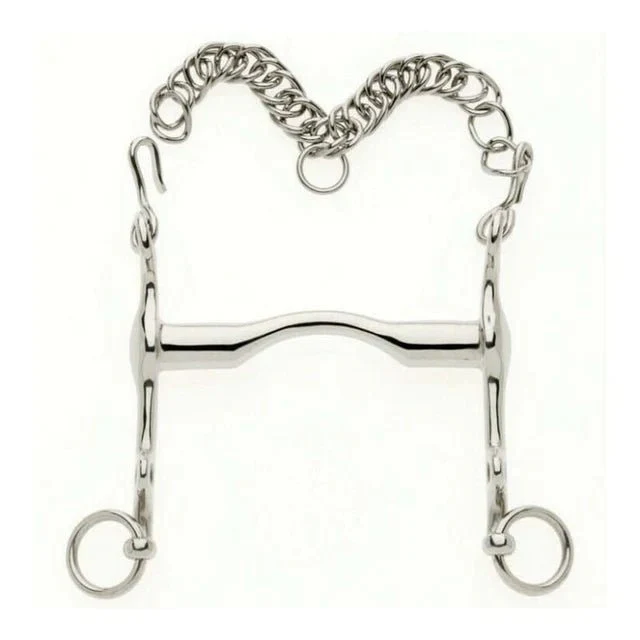
Lorina Fixed Cheek Dressage Weymouth Bit
Lorina Fixed Cheek Dressage Weymouth Bit
In a double bridle arrangement, the curb or weymouth assist in achieving maximum flexion from the horse whilst maintaining a light contact.
The curb acts on multiple points of the horse at once to achieve this result. In the mouth, the curb puts pressure over the tongue and bars, which can be more or less severe depending on how tight the curb chain is kept, how much of a port the mouthpiece has, and how long the shanks are.
The curb uses a leverage action, since it attaches to the cheek and headpieces of the bridle at a point above the mouthpiece, and the reins attach to the end of a shank (essentially a lever). When the rein is engaged, this lever action puts a level of pressure on the poll through the cheek and headpiece, and on the mouth and jaw through essentially squeezing the lower jaw between the mouthpiece and the curb chain running under the jaw.
A tighter curb chain limits the amount of angle that the curb shanks can travel, this then causes less pressure on the poll and jaw.
The ideal point at which the curb chain should engage is when the cheeks are approximately at a 45 degree angle to the mouth of the horse.
Fixed Cheek.
Most curbs today have fixed cheeks, meaning that the shanks are molded to the mouthpiece in one solid piece.
Product Information
Product Information
Shipping & Returns
Shipping & Returns
Description
In a double bridle arrangement, the curb or weymouth assist in achieving maximum flexion from the horse whilst maintaining a light contact.
The curb acts on multiple points of the horse at once to achieve this result. In the mouth, the curb puts pressure over the tongue and bars, which can be more or less severe depending on how tight the curb chain is kept, how much of a port the mouthpiece has, and how long the shanks are.
The curb uses a leverage action, since it attaches to the cheek and headpieces of the bridle at a point above the mouthpiece, and the reins attach to the end of a shank (essentially a lever). When the rein is engaged, this lever action puts a level of pressure on the poll through the cheek and headpiece, and on the mouth and jaw through essentially squeezing the lower jaw between the mouthpiece and the curb chain running under the jaw.
A tighter curb chain limits the amount of angle that the curb shanks can travel, this then causes less pressure on the poll and jaw.
The ideal point at which the curb chain should engage is when the cheeks are approximately at a 45 degree angle to the mouth of the horse.
Fixed Cheek.
Most curbs today have fixed cheeks, meaning that the shanks are molded to the mouthpiece in one solid piece.